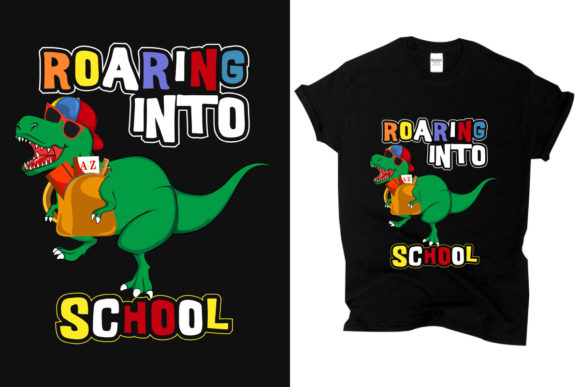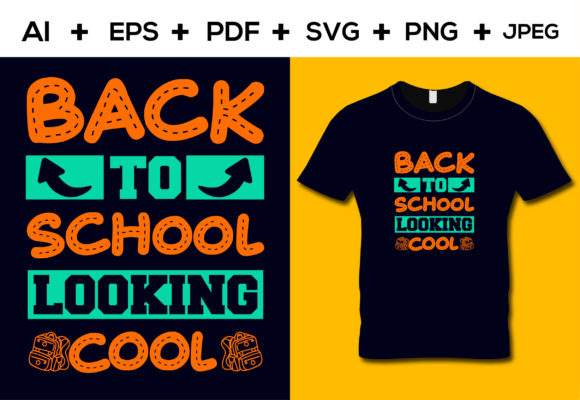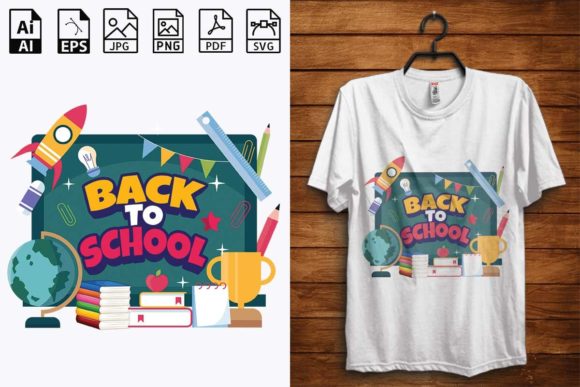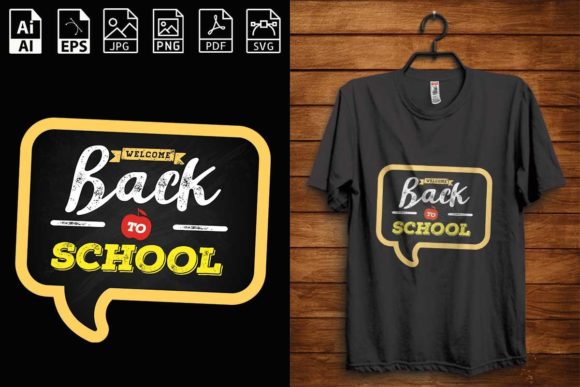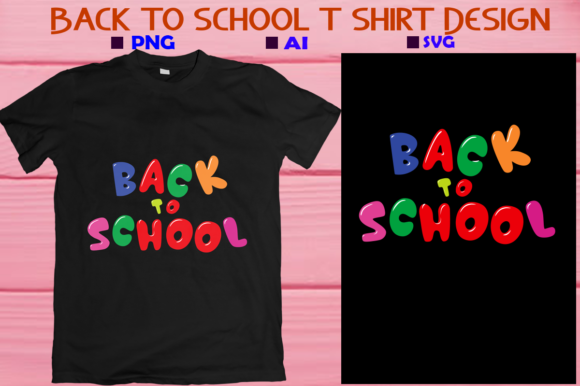
Back to School T-shirt, Back to School.
The end of summer brings a familiar rhythm. Store shelves fill with notebooks and glue sticks. Bus schedules get taped to refrigerators. And for many of us, the search begins for that one outfit that signals the start of something new. A Back to School T-shirt does more than cover a kid’s shoulders. It marks a moment. It makes the first day feel intentional. For parents, teachers, small business owners, and creators, the right design can turn a simple shirt into a memory, a uniform, or even a small income stream. That is where a well-made digital file becomes truly useful.
What a Back to School T-shirt Design Digital File Actually Gives You
When you buy a design as a digital download, you are not just getting a picture. You are getting a set of working files that let you do what you need without starting from scratch. The package typically includes an AI file, an SVG file, and a PNG file. Each one serves a different purpose.
The AI file is for designers or anyone comfortable with Adobe Illustrator. It keeps all the layers intact. You can open it, move elements around, change colors, and adjust the layout without degrading the quality. The SVG file is the versatile workhorse. It works in Cricut Design Space, Silhouette Studio, and most cutting machine software. You can resize it from a tiny sticker to a full chest print without losing sharp edges. The PNG file is ready to use as is. It has a transparent background, so you can drop it onto a shirt mockup, upload it to a print-on-demand site, or send it to a local printer without extra cleanup.
A key feature here is that the files are fully editable and 100% vector-based. That means every curve and line is mathematically defined. You can scale it up for a banner or shrink it down for a hat embroidery. The color can be changed in seconds. If the design comes with a red apple and you need it in teal to match your school colors, that is a trivial adjustment. Print readiness means the file is set up at the right resolution and format so that when you send it to a printer, what you see is what you get.
Where People Actually Use These Designs
Back to School T-shirt designs show up in more places than you might expect. A single file can serve very different people in very different situations.
Parents Making First Day Memories
For many parents, the first day of school is a photo event. You want your child to look put together, but you also want something that reflects their personality or your family’s humor. A shirt that says something clever about summer ending or a new grade starting becomes the centerpiece of that porch picture. You can buy a digital file, cut the design yourself with a cutting machine, and press it onto a blank shirt in under an hour. The ability to change the color means you can match the shirt color to your child’s favorite shade or the school’s spirit colors.
If you have multiple kids, you can buy one file and use it for each child, adjusting the name or the grade number in the design. That is where the editable vector format saves real time. You are not buying separate shirts for each kid. You are making them from one design.
Teachers Building Classroom Community
A teacher walking into a new classroom on day one wants to establish rapport fast. Wearing a shirt with a funny teacher joke or a subject-themed design breaks the ice. Students see that you have a personality. It makes you approachable. A digital file lets you create a custom shirt for yourself, and if you want, you can make matching shirts for a teaching team or a grade-level group. The PNG file works perfectly for uploading to a print-on-demand service if you do not have a heat press. You pick the shirt color, upload the design, and the printer handles the rest.
Many teachers also use these designs for welcome back events, open houses, or spirit weeks. Having the file on hand means you can print a shirt for each occasion without paying a designer each time.
Small Business Owners and Side Hustlers
Selling Back to School shirts is a seasonal opportunity that comes every year. If you run an Etsy shop, a booth at a local market, or a small online store, having a set of editable digital designs means you can produce inventory quickly. You can change the colors to offer multiple variants, resize the design for adult and youth sizes, and create listings faster because the file work is already done.
The resizable vector nature of the files directly affects your bottom line. One design can become a toddler tee, a youth tee, an adult tee, a tote bag, a pillow, or a mug. You are not limited to one product. You can test different products with the same design and see what sells. The low upfront cost of a digital file compared to hiring a custom designer makes it accessible even if you are just testing the waters.
PTA Groups, School Clubs, and Sports Teams
Parent-teacher associations and extracurricular groups often need shirts for events, fundraisers, or field trips. Ordering custom shirts from a screen printer usually requires a minimum quantity and a lead time of two weeks. With a digital design file, a volunteer can produce shirts on demand. If you need ten shirts for a reading night and then twenty for a science fair, you make exactly what you need. No leftover inventory. No rush fees.
The SVG file plays nicely with the most common cutting machines. A parent with a Cricut can cut iron-on vinyl and press shirts in an evening. The group saves money, and the shirts can still look professional because the design is a clean vector graphic.
Church Groups and Community Organizations
Back to School season is also a time when churches and community centers host supply drives, backpack giveaways, and blessing events. Staff and volunteers often wear matching shirts so families know who to ask for help. A digital file allows a small team with limited budget to create those shirts themselves. They can change the design to include the organization name or event date, produce shirts in different sizes, and have them ready in time for the event without paying rush shipping on custom orders.
What to Think About Before You Download and Use the File
Getting a digital file is fast, but a little planning makes the experience smoother. First, think about the shirt blank you want to use. Not all shirts take heat transfer vinyl the same way. A 100% cotton shirt works well for most applications, but if you want a stretchy fabric, be aware that the vinyl may crack over time. Polyester fabric requires lower heat and shorter press time. If you are new to heat pressing, test the design on a scrap shirt before applying it to the final one.
Second, check the file format against your equipment. If you use a Cricut, the SVG file is your best bet. If you use a Silhouette, the same SVG works. If you are sending to a commercial printer, the AI file gives the most flexibility. If you only need a quick digital mockup, the PNG file saves steps.
Third, consider the color of the shirt. A dark shirt needs opaque vinyl or a white underlayer if the design has light colors. The vector file allows you to add a white outline or shadow to make the design pop on dark fabric. Take advantage of that editability before you cut.
Fourth, think about sizing. A design that looks good on a computer screen might be too large or too small when transferred to a shirt. A good rule of thumb for a chest print is roughly ten inches wide for an adult medium and eight inches for a youth large. Use the resizable nature of the vector file to adjust the proportions without distorting the artwork.
How Different Users Get Different Value from the Same File
The same Back to School T-shirt design file can serve a busy parent, a teacher, a small business owner, and a volunteer organizer in completely different ways. The parent cares about speed and simplicity. They want a PNG file that they can send to a local printer or a simple SVG for a quick cut. The teacher might want the AI file to tweak the wording or add a subject area. The business owner wants the full set so they can create multiple product variations and list them in their shop. The volunteer wants a file that works on their personal cutting machine without a steep learning curve.
A well-prepared digital file accommodates all of these scenarios. If the file is organized with clear layers, if the colors are grouped logically, and if the fonts are converted to outlines so they do not break on a different computer, then the end user gets a smooth experience regardless of their technical skill level.
Why the Details in the File Description Matter
When you read a listing for a Back to School T-shirt design file, the item description tells you what you can actually do with it. Phrases like fully editable, 100% vector, 100% resizable, and 100% print ready are not marketing fluff. They describe real capabilities. Fully editable means you can open the file in a vector program and change every element. 100% vector means the image will not pixelate no matter how big you make it. 100% resizable means you are not locked into one dimension. 100% print ready means the color mode, resolution, and file structure match what printers expect.
If you run into a problem, the seller says to contact them. That is worth remembering. Vector files can sometimes act oddly when opened in different software versions. A quick message usually resolves the issue faster than trying to troubleshoot alone.
Making the Most of a Single Design File
A single Back to School T-shirt design can be the starting point for a whole collection. Change the color palette to match different school colors. Swap the text to accommodate different grade levels. Add a small element like a mascot silhouette or a subject icon to make variations. Because the file is vector, these changes take minutes instead of hours.
For a business owner, that means one purchase can yield a dozen listings. For a parent, it means one file can outfit multiple kids. For a teacher, it means one design can work for a whole team. The value multiplies when you treat the file as a template rather than a finished piece.
Seasonal Timing and Practical Planning
Back to School happens at the same time every year. The window for selling or preparing shirts starts in mid-July and runs through early September. If you plan to sell, having the design file ready in June gives you time to make samples, photograph them, and list them. If you plan to make shirts for your own family, ordering blanks and supplies in July avoids the last-minute rush. The digital file does not expire. You can use it this year, next year, and the year after that. The only thing that changes is the size of the kids.
For small business owners, the ability to produce shirts on demand means you can test a design with a small run before committing to bulk inventory. If a particular phrase or graphic resonates, you can scale up without reordering artwork. If it does not sell, you have not lost much because the file was a one-time expense.
Real Scenarios, Real Outcomes
Consider a mom of three who buys one digital design file. She makes a shirt for her kindergartner in blue, her second grader in green, and her fifth grader in red. Each shirt has the same graphic but a different color background. The total time from download to finished shirts is maybe two hours. The cost per shirt is the blank plus a few cents of vinyl. She saves money compared to buying three custom shirts online, and the kids get exactly what they wanted.
Consider a teacher who runs a small Etsy shop on the side. She buys one design file, changes the colors to match local school colors, creates listings for five different grade levels, and sells forty shirts in August. The file cost her under ten dollars. The revenue covers the blanks, the supplies, and pays for her classroom supplies. The design works because it is editable and scalable.
Consider a PTA volunteer who needs shirts for a back-to-school night. She downloads the SVG file, cuts the design onto iron-on vinyl, and presses twenty shirts in one evening. The shirts cost less than eight dollars each. A custom order from a local shop would have been double that and required a two-week lead time. The event happens, the shirts look great, and the budget stays intact.
These are not hypotheticals. They are the everyday reality of a useful, well-made digital file.
Final Thoughts on Back to School T-shirt Design Files
A Back to School T-shirt design digital file is a tool. It works for you whether you are making one shirt for your own child or one hundred shirts for a customer base. The key is knowing what you want to achieve and choosing a file that gives you the flexibility to get there. Look for vector formats, editable layers, and clear file organization. Take advantage of the resizability to test different products. Use the color editability to match your specific needs. And when something does not go as planned, reach out. The people who create these files want you to succeed with them.
The first day of school comes around every year. Having the right design ready means you can focus on the moment instead of scrambling for a shirt at the last minute. That is the whole point.